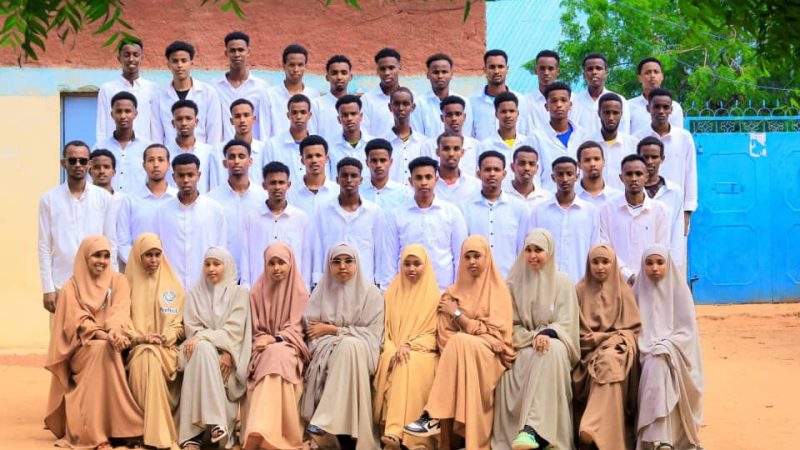
From a large household and limited family finances in beletwein, I faced numerous challenges in striving for excellence. The situation became even more difficult in my primary school when foreign Ethiopian troops entered the country, causing increased hardships. Despite these circumstances, I made efforts to provide some comfort to my relatives, although it was short-lived. In the eleventh grade, I seized the opportunity to learn essential lifesaving skills from medicins sans Frontiers (MSF) volunteers, which gave me a chance to survive. Subsequently, I began working as a teacher in private classes.
I initially had five adult students eager to study medical emergencies. However, I vividly recall the difficulties I encountered on the first day, such as trembling, overwhelming fear, speechlessness, and a rapid heartbeat. I wanted to know whether I would be capable of teaching and if my small stature and exceptionally thin frame would hinder my ability to pursue this profession. Fortunately, I received valuable guidance from senior teachers and school management.
This transition has opened the door to a more respectful environment for me. However, upon completing my secondary education. It is common to be encouraged to pursue higher education in Mogadishu, which has introduced a new concern that weighs heavily on me.
After a few days, I remembered a friend of mine who owns a school. Without hesitation, he agreed to teach mathematics, which presented me with an opportunity to relocate to Mogadishu. At the beginning of 2012, the only available means of public transportation from Beletwein to Mogadishu were buses. I paid $25 for a seat in one of these vehicles, and a day later, I safely arrived at my uncle’s home, where my older brother and two other brothers studying in Mogadishu were also staying. Since my brother already resides there, having an additional visitor imposes an even greater burden.
The following morning, I went to Waaberi, where my friend Shine, kindly offered me an extra mat. Consequently, we found ourselves sharing a room with two other individuals.
Although Waaberi and Furyaasha are distant, in 2012 and 2013, a currency crisis occurred, causing the exchange rate to plummet abruptly by 50%. All costs, such as living, tuition, books, rent, and transportation, can be fully covered for $ 100$.
Initially, it was a challenging year. I remember walking through three districts to reach the school at seven in the morning. However, I would take the bus while studying in the scorching afternoon sun at the university. I could only afford to eat once a day and I would walk home after class. After a year, I secured a contract with two more schools. However, my career in school teaching came to an end in early 2016 when I graduated.
After approximately six years of teaching, I pursued a different teaching career. I signed a deal with a regional educational college, where my experience improved considerably. However, the responsibilities were massive as I was unfamiliar with the new environment, I was able to work and make a significant contribution during that four-year commitment before returning to Mogadishu in mid-2020.
After spending years working in that region, I unfortunately misplaced the keys to the city. Thankfully, my teammates extended a helping hand by supporting me to continue working alongside them. Nevertheless, after six months, I decided to embark on a new endeavor by pursuing a postgraduate degree.
After extensive searching for the ideal country, I ultimately settled on Kenya as my destination for further education. After three arduous years of dedicated effort, I completed my postgraduate studies and returned safely to my home country. I had anticipated that my expanded knowledge would be highly valued by educational institutions, but the reality proved to be quite different, as my degrees didn’t appear to mean everything.
After days of tirelessly searching for any vacancy in Mogadishu, I eventually managed to secure teaching opportunities. However, the workload offered by this was far from satisfactory. questioning whether teaching was my real fate, I reluctantly accepted this was the time to resign, effective January 2024 In a moment of quiet contemplation, “Dear teaching, I’m grateful for your assistance in my hardship, but you are not my destination”.
Teachers worldwide often earn less than their counterparts in other professions despite having similar education levels. They, too must navigate the challenges of renting homes, raising children, and aspiring for a better life, just like accountants, lawyers, and medical professionals. However, Somali society has unfortunately lowered the standards for teacher remuneration, resulting in the consistent hiring of less qualified candidates within the education sector. This, in turn, leads to diminished student performance
By: Abdikarim Adan Osman (Afyare)